Newsletter
Will Advertising and Promotion of Genuine Parallel Imports Constitute Trademark Infringement?—Commentary on the Intellectual Property and Commercial Court 2025 Civil Judgment No. 11
I. Facts of the Case
1. The Plaintiff, The Polo/Lauren Company L.P., is the owner of the POLO RALPH LAUREN series of trademarks, including the trademarks " ,"
," 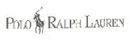 ," and "
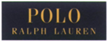 " (collectively, the "Trademarks") and is engaged in the production and manufacture of apparel. Widely recognized by the relevant consumers in Taiwan, the Trademarks have become well-known trademarks in Taiwan.
2. The Defendant Jie Sin Trading Co., Ltd. ("Jie Sin") is engaged in the sale of parallel imports. It operated a retail counter at an outlet mall operated by the Defendant Esse Commerce Development Inc. ("Esse") and used the words "POLO RALPH LAUREN" for advertising and promotional purposes on the signage of the retail counter, the exterior glass display windows, and Esse's official website.
3. The Plaintiff alleged that the Defendants' conduct constituted trademark infringement under Subparagraphs 1 and 3 of Article 68 and Subparagraph 1 of Article 70 of the Trademark Act and violated Article 25 of the Fair Trade Act. Both parties appealed against the first-instance judgment.
II. Key Issues
1. Whether Jie Sin's and Esse's use of the words "POLO RALPH LAUREN" at the retail counter, on the glass display windows, and on the official website constituted trademark use and trademark infringement.
2. Given that Jie Sin sold genuine parallel imports, whether its use of the Trademarks at locations other than on the goods themselves—namely at the retail counter, on the display windows, and on the official website—was protected by the exhaustion doctrine under Paragraph 2 of Article 36 of the Trademark Act or constituted nominative fair use under Subparagraph 2, Paragraph 1 of Article 36 of the Trademark Act.
3. Whether Jie Sin's use of the Trademarks violated Subparagraphs 1 and 3 of Article 68 and Subparagraph 1 of Article 70 of the Trademark Act and Article 25 of the Fair Trade Act, and whether Esse, as the operator of the shopping mall, should be held jointly liable for trademark infringement.
III. Court's Holdings
1. Jie Sin's and Esse's use of the words "POLO RALPH LAUREN" at the retail counter, on the glass display windows, and on the official website constituted trademark use.
(1) Jie Sin displayed the words "POLO RALPH LAUREN" at its retail counter and on the glass display windows in enlarged, bold black lettering and placed them prominently in the center of the counter and the exterior glass display windows, creating a strong and conspicuous visual impression. The same wording was also displayed on the shopping mall's official website. The Court found that such use constituted trademark use, as it was intended to create an impression of an association with the goods or services provided by the Plaintiff and was sufficient to cause consumers to perceive the wording as a source-indicator of the goods or services.
(2) Although Jie Sin argued that it had also displayed the words "JS'Maxx" and "True article parallel imports," those words appeared in a smaller font and therefore did not have a bearing on the Court's conclusion that the prominent use of "POLO RALPH LAUREN" constituted trademark use.
2. Although Jie Sin sold genuine parallel imports, its use of the Trademarks at locations other than on the goods themselves—namely at the retail counter, on the display windows, and on the official website—was not protected by the exhaustion doctrine under Paragraph 2 of Article 36 of the Trademark Act and did not constitute nominative fair use.
(1) The Court held that the exhaustion doctrine prevents a trademark owner from asserting its trademark rights against the genuine parallel imports themselves, but the doctrine should not be extended to trademark use beyond the genuine goods themselves. The Court also cited the majority opinion on Legal Issue No. 2 under the "Civil Litigation Issues" discussed at the Judicial Yuan's 2017 Intellectual Property Law Symposium. According to that opinion, where a trademark is displayed online, used in advertisements, or included in catalogs for the resale or promotion of genuine goods, such use may fall within the concept of nominative fair use under Paragraph 1 of Article 36 of the Trademark Act, and thus fall outside the scope of trademark rights, only if the use is necessary to provide accurate and truthful product information, is consistent with good-faith practices in commercial transactions, and is unlikely to cause confusion among relevant consumers as to the source of the goods or services.
(2) The Court found that Jie Sin used the Trademarks for advertising and promotional purposes at the department store's retail counter, on the glass display windows, and on the official website; and that Jie Sin did not display its Chinese corporate name on the signage or at the entrance of the retail counter to identify the entity actually running the business. The Court therefore found that such use did not constitute nominative fair use, as it was inconsistent with good-faith practices in commercial transactions and went beyond what was necessary for identifying the source of the goods being sold.
3. Jie Sin's use of the Trademarks violated Subparagraphs 1 and 3 of Article 68 and Subparagraph 1 of Article 70 of the Trademark Act and Article 25 of the Fair Trade Act. Esse was also jointly liable for the infringement.
(1) It was undisputed between the parties that the Trademarks were well-known trademarks. The Defendants' use of the words "POLO RALPH LAUREN," which were identical or similar to the Trademarks, for advertising and promotional purposes constituted trademark use. And as such use involved apparel goods and services identical or similar to those designated for the Trademarks, the Court found that it was likely to cause confusion among the relevant consumers and could diminish the distinctiveness of the Trademarks. Accordingly, the Court held that the Defendants' conduct constituted infringement under Subparagraphs 1 and 3 of Article 68 and Subparagraph 1 of Article 70 of the Trademark Act.
(2) The Court further found that the Plaintiff and the Defendants were competitors, as they all sold apparel or leased retail space to apparel retailers. The overall layout of Jie Sin's retail counter and the design of its display windows resembled those of stores operated by the Plaintiff, and the Trademarks were prominently displayed in a manner likely to cause consumers to mistakenly believe that the goods were sold by the Plaintiff or its authorized agent. The Court therefore characterized such conduct as free-riding on the fruits of another's efforts and held that it constituted a manifestly unfair act capable of affecting trading order under Article 25 of the Fair Trade Act.
(3) Under the "Retail Counter Shopfitting" clause of the retail counter agreement, Jie Sin was required to apply to Esse and obtain its written consent before carrying out shopfitting or using trademarks. This demonstrates that Esse had authority to manage and approve the setup of the retail counter. Esse also had control over the content published on its official website and received a percentage of the sales generated by the retail counter, thereby deriving an economic benefit from its operations. The Court therefore found that Esse had failed to exercise the duty of care of a good administrator and should be held jointly liable with Jie Sin for the infringement of the Trademarks.
IV. Lessons Learned from This Case
1. Although the sale of genuine parallel imports does not in itself constitute trademark infringement, parallel importers may not freely use the original brand owner's trademarks for advertising and promotional purposes.
The legislative purpose of the trademark exhaustion doctrine is to allow goods placed on the market with the trademark owner's consent to circulate freely. In principle, however, the doctrine applies only to the genuine goods themselves. Without the trademark owner's consent or authorization, a parallel importer is not entitled to use the trademark as a trademark for advertising and promotional purposes. Accordingly, parallel importers should distinguish between the right to sell genuine parallel imports and the right to use the original brand owner's trademarks for marketing and promotional purposes. The lawful origin of parallel imports does not mean that all uses of the relevant trademarks are necessarily free from infringement risk.
2. When using an original brand owner's trademark at locations other than on the genuine goods themselves, parallel importers should ensure that the manner of use does not exceed what is necessary for nominative fair use and is consistent with good-faith practices in commercial transactions.
Parallel importers are not categorically prohibited from using an original brand owner's trademark to inform consumers of the brand of the goods being sold. However, such use should be limited to what is necessary to communicate accurate product information and should conform to good-faith practices in commercial transactions. In particular, with respect to the font size, placement, color, and overall layout of the trademark, parallel importers should avoid presenting the original brand owner's trademark as the predominant or most conspicuous visual element of the overall advertisement or storefront. They should also clearly identify their own business entity at their stores, retail counters, websites, and in advertisements, and appropriately disclose their status as parallel importers rather than the original brand owner, an authorized agent, or an authorized distributor, so that the relevant consumers may correctly discern the source of the goods or services. Otherwise, a court may find that the manner of use is likely to cause consumers to mistakenly believe that the operator is the original brand owner, its agent, or an authorized distributor, thereby exceeding the scope of nominative fair use.
3. Operators of department stores and shopping malls that lease retail space should exercise appropriate oversight over their tenants' use of trademarks. Even where the lease agreement provides that the retail counter operator bears sole responsibility for intellectual property matters, such contractual arrangements do not fully eliminate the risk of joint liability for infringement.
(1) Although Esse argued that it merely operated the shopping mall and that its retail counter agreement required Jie Sin to warrant that the goods it sold would not infringe any third party's intellectual property rights, the Court nevertheless found that Esse exercised a certain degree of control over the setup of the retail counter and the advertisements placed on its official website, and that Esse also received a percentage of the retail counter's sales and therefore derived an economic benefit from its operations. Consequently, the Court held that Esse could not be completely exempted from its duty of care merely through a contractual allocation of responsibility.
(2) Accordingly, even in a case where a department store or shopping mall operator and its tenant agree that the tenant will bear sole responsibility for intellectual property matters, such an agreement may not be adequate to fully exempt the operator from its supervisory duties and duty of care. Accordingly, the operator may still be held jointly liable for its tenant's acts of infringement. We therefore recommend that department store and shopping mall operators appropriately review and monitor their tenants' shopfitting, trademark displays, and advertising and promotional practices in order to mitigate the legal risk of joint liability for infringement.